A church building inspection checklist for any state
Fire, sprinklers, the kitchen hood, boilers, elevators and backflow: what a church building needs inspected, how often, and who to call in your state.
By Tom Moore · October 25, 2026 · 12 min read
I'll always remember my first day in charge of the facilities at the private school in Georgia, back in 2006. The woman who'd had the job before me was leaving on her own, and as she handed things over, she gave me a white three-ring binder with just a few pages in it. One page listed five or six vendors. Another had some basic information about the buildings and the few things she'd been keeping track of, like the HVAC filter changes, and that was about it. There was no list of inspections, not even for the HVAC units, and nobody was tracking the age of the roof, or of any other system for that matter.
I felt like I was starting at square one. If there had already been a system in place, we'd have been so much further along, and we could have put our attention on the problems that came down the pike almost immediately: mold remediation, a leaking roof, and humidity and moisture control in several rooms. Back then, software for this kind of work was only just coming onto the market, and most of it was built for big institutions like hospitals.
Most people who take over a church or school building inherit some version of that binder, and the list of inspections is usually the page that's missing. It's also the page with deadlines on it, which makes it the first one worth writing, and that's what this article will help you do.
We've already written a guide for churches in Indiana that names every office there, and this one works in any state. The list of things that get inspected is nearly the same wherever you are, because most states build their rules on the same national codes. What changes from place to place is who does the inspecting and how often they come, so below you'll find the list, the usual intervals (each one linked to where it comes from) and a way to find the right office in your state.
What gets inspected, and how often
Here's the whole list in one place. The first seven rows come from the national fire code and standards that most states adopt, so they're close to the same everywhere, although your fire department can change them. The rest are set by your state, your city or county, or your water utility.
| What | How often | Who does it |
|---|---|---|
| Fire extinguishers | A quick look every month, and a full service every year | You for the monthly look, a licensed company for the service |
| Emergency lights | A 30-second test every month, and a 90-minute test every year | You or an electrician, with the results written down |
| Fire alarm | A look every six months, with a test of the backup batteries, and a full test every year | You for the look, a fire alarm company for the batteries and the yearly test |
| Sprinklers | Monthly and quarterly checks, a full service every year, and a look inside the pipes every five years | You for the simple checks, a sprinkler contractor for the rest |
| Kitchen hood fire suppression | A quick look every month, and a full service every six months | You for the monthly look, a kitchen fire suppression company for the service |
| Kitchen hood and ductwork | Inspected for grease every year, and cleaned when it's needed | A hood cleaning company |
| Fire doors | Inspected every year | You or a door company, whoever your fire marshal accepts |
| Fire inspection | As often as your fire department decides | Your local fire department, or the state fire marshal in some areas |
| Boiler | Set by your state (in Florida, every two years for a heating boiler) | A state inspector, or one from your insurance company |
| Elevators and lifts | Set by your state (every six months in Tennessee, every eighteen in Connecticut) | An inspector who works for or is licensed by your state or city |
| Kitchen permit | Whenever your health department says, if you need one | Your county or city health department |
| Backflow assemblies | Usually every year | A certified backflow tester |
| Asbestos, if you run a K-12 school | A check every six months, and a reinspection every three years | Your school for the check, an accredited inspector for the reinspection |
Fire safety
The fire inspection itself comes from whoever enforces the fire code at your address. In most places that's the local fire department or a fire marshal's office, and in some areas it's the state fire marshal, so if you're not sure where to start, the U.S. Fire Administration lists every state fire marshal's office.
How often they come, and what they focus on, depends on how your building is classified and on local practice, so the easiest thing is to ask. Call the fire department's non-emergency number, ask who inspects places of assembly, and ask when they last inspected yours. If there's a school or a licensed daycare in the building, mention that too, because it changes how the fire code treats the building.
The inspector is there to check that your fire protection is being looked after, but the looking after happens between visits, on schedules that come from national standards. Fire extinguishers need a quick look every month to make sure each one is in its place, the gauge is in the green and the seal on the pin isn't broken, and then a full service once a year by a licensed company, which marks the month and year on the tag. Minnesota's state fire marshal explains both checks, and most states follow the same national standard.
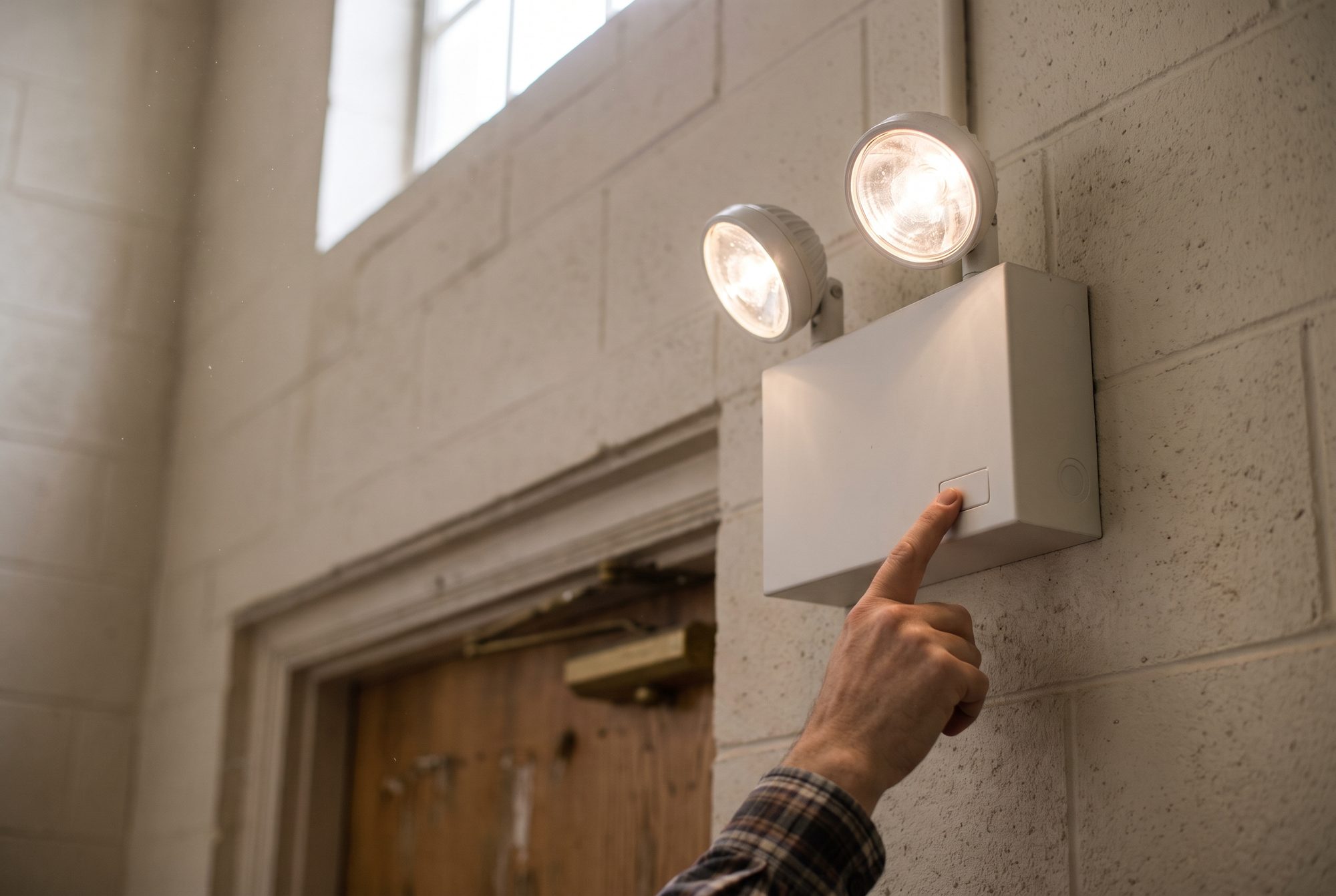
Emergency lights, the battery units that light the hallways and exits when the power goes out, need a 30-second test every month and a 90-minute test once a year, and the results need to be written down, because the fire inspector can ask to see them. The Kansas State Fire Marshal's emergency lighting guide includes a simple log you can copy.
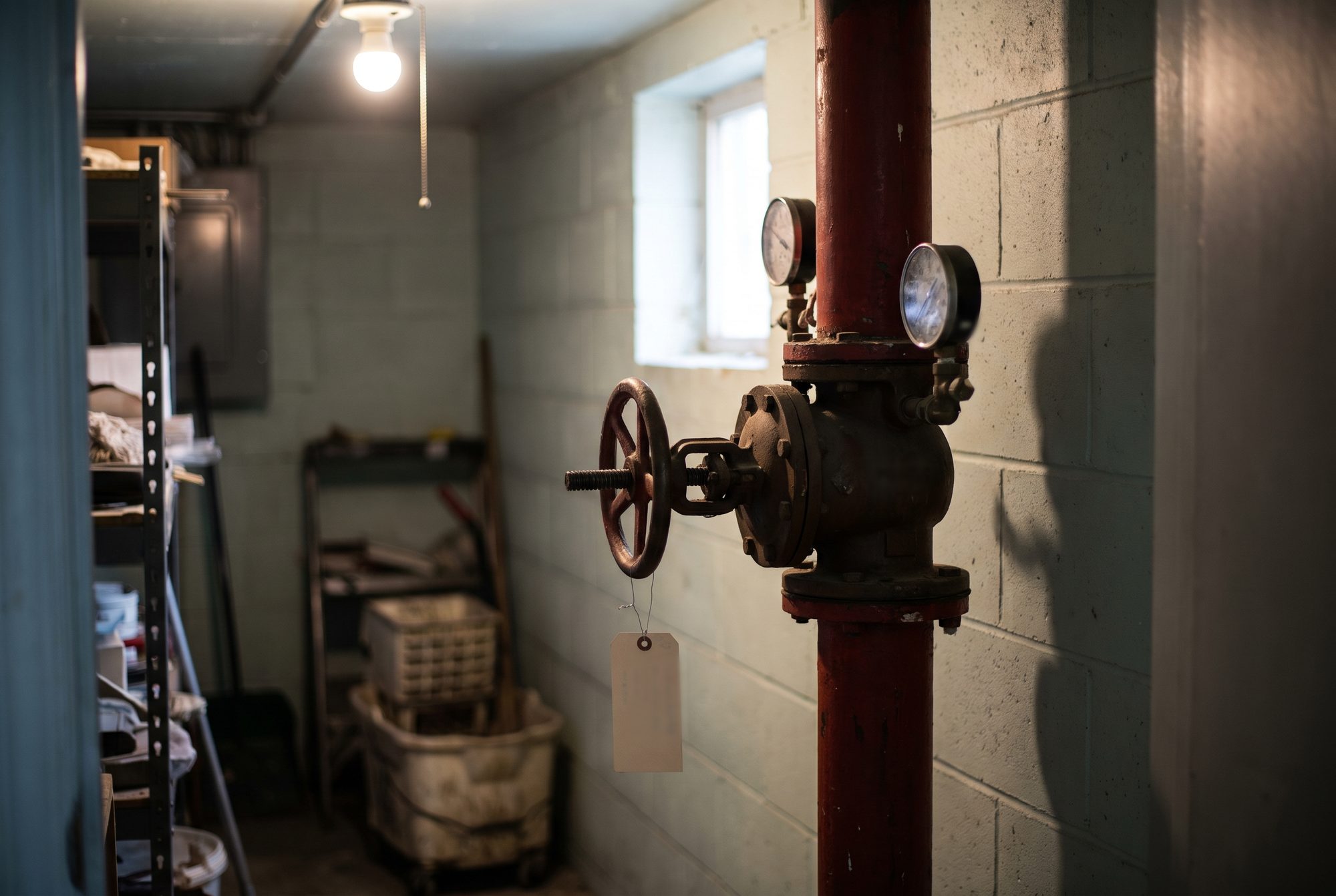
A fire alarm system gets a full test from a qualified company every year, which is how Portland's fire marshal sets it out for a typical monitored system. In between, the panel, pull stations, detectors and horns get a look every six months, which your own staff can do, and the backup batteries that keep the alarm running in a power outage get tested on the same schedule, usually by the alarm company. Minnesota's health department explains both. Sprinkler systems have the longest schedule of all, under a standard called NFPA 25: a monthly look at the valves and gauges, some checks every quarter, a full service every year by a sprinkler contractor, and an inspection inside the pipes every five years. The Minnesota Department of Health's guide to sprinkler maintenance walks through all of it in plain English.
Fire doors are on a yearly schedule too. They're the doors with a rating label on the hinge edge, usually at stairwells, the boiler room and other walls built to hold back a fire, and NFPA 80, the national standard for fire doors, calls for an inspection every year: the labels, any damage, the gaps around the door and a test that it closes and latches on its own. NFPA says the building owner can do it or hire it out, as long as the fire marshal accepts the person doing it. A fire door only works when it's closed, so a wedge or a kickstand holding one open is a problem every day, not just on inspection day.
Most of that is a contractor's job, but the quick checks in between usually fall to whoever looks after the building: the monthly walk past every extinguisher, the monthly emergency light test, the monthly look at the sprinkler valves and gauges, and the fire alarm's look every six months. They're also the easiest ones to let slide, because nobody sends you a reminder for a job you do yourself.
The church kitchen
A church kitchen gets looked at from two directions, by the fire code and by the health department, and it helps to keep the two separate.
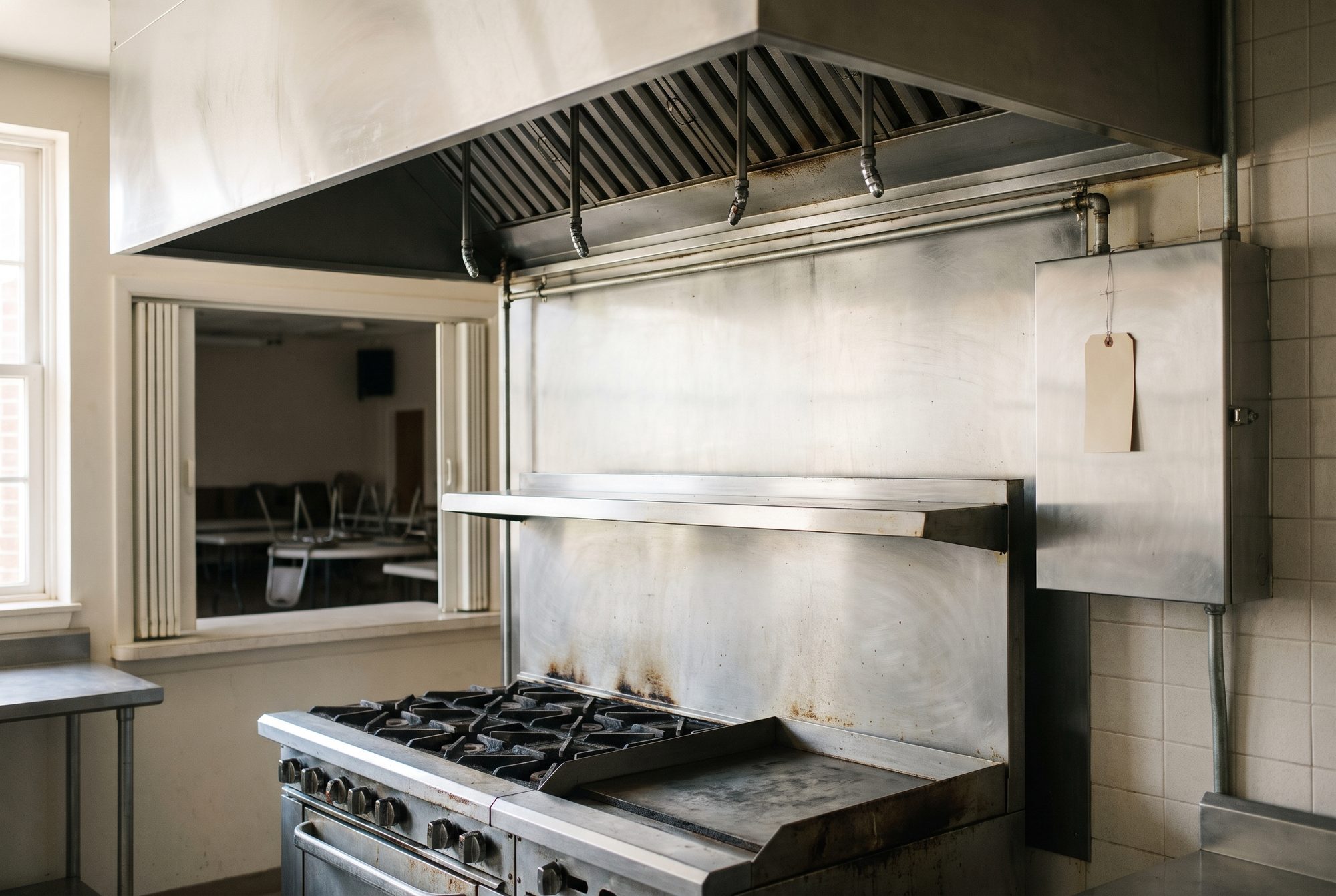
On the fire side, the hood over the stove is on two schedules of its own. The hood and its ductwork have to be inspected for grease and cleaned when there's buildup, and the International Fire Code, which most states use, sets that inspection at once every twelve months for a place of worship, compared with every three months for a restaurant that's charbroiling all day. The fire suppression system built into the hood is on a shorter clock, because it has to be serviced at least every six months by a qualified company. In between, the standard for these systems asks the owner for a quick look every month: the pull handle clear, the seals and service tag in place and the gauge in the green. A fire district's owner checklist has the full list.
The health permit is a separate question, and the answer depends on what actually happens in your kitchen. Food rules for restaurants and other food service are set by your state (and sometimes your county or city), usually based on the FDA's model Food Code, and they're usually enforced by your county or city health department. A members-only potluck, a free community supper, a food pantry handing out groceries, coffee sold on Sunday mornings and a renter's caterer can each be treated differently, so describe what really goes on and ask what it requires. NACCHO's directory of local health departments will find yours by ZIP code.
Boilers
Boilers are inspected under a state boiler law in most of the country, and a few big cities, including Chicago, Detroit, Los Angeles, Milwaukee, New York and Seattle, run their own programs. The National Board of Boiler and Pressure Vessel Inspectors lists the chief inspector for each state and city, which is the quickest way to find the office that covers your building.
The person who inspects your boiler might not work for the state at all. In a lot of states it's either a state inspector or an inspector from the company that insures your boiler, commissioned by the state to do the job, which is how Colorado's program works. How often they come depends on your state and on the kind of boiler. Florida's law, for example, makes a heating boiler's certificate good for 24 months and a high-pressure power boiler's for 12.
Either way, the certificate usually hangs on the wall of the boiler room. Florida's law says it has to be posted under glass in the room with the boiler, so that's the first place to look, and if you can't find one, that tells you something too.
Elevators and wheelchair lifts
Elevators are inspected by a state program in most of the country and by the city in some places, and this is where states differ the most. Tennessee wants every elevator inspected and tested every six months, while Connecticut inspects each one at least once every eighteen months. A search for your state's name and "elevator inspection" will usually turn up the program and its schedule.
The certificate is usually posted in the car or close to it. Texas, for example, lets it hang inside the car or in the lobby within ten feet of the call button, so check both places before you decide it's missing.
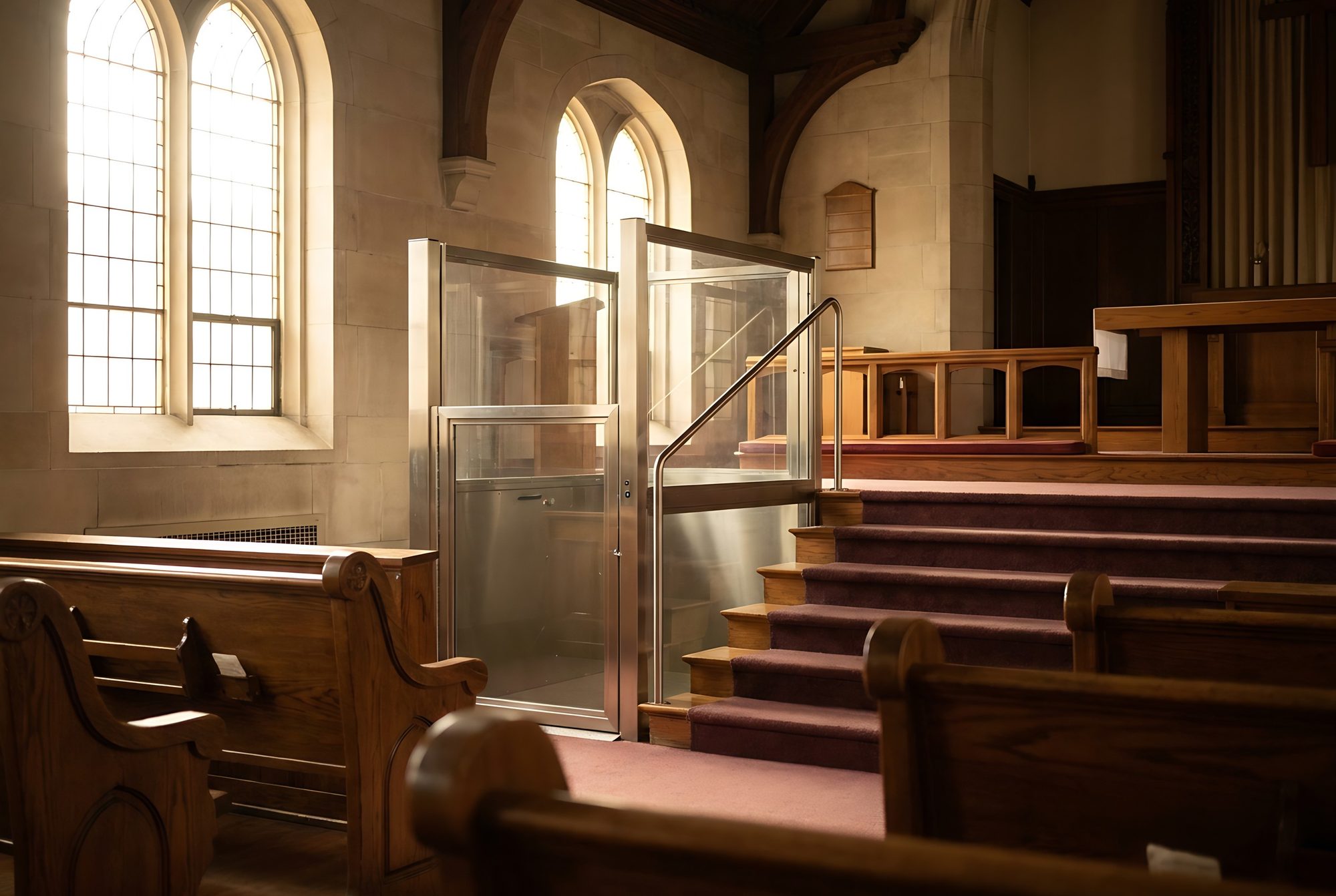
Wheelchair platform lifts and stair lifts can count too. Tennessee's rule covers every elevator, dumbwaiter, escalator "and other lift," so if your church added a lift to reach the platform or the balcony, it may be on the same schedule as an elevator.
Backflow assemblies
A backflow assembly keeps water from your building's systems from flowing back into the public water supply, and the testable kind has to be checked by a certified tester, usually once a year. In most places your water utility keeps track of the tests and sends the reminders, but sometimes it's another office. In Los Angeles County, for example, the county health department certifies the testers and keeps the records. Churches tend to have more of these than people expect, on the irrigation, the boiler, the kitchen and the sprinkler line, so ask your utility which ones it has on file for your address.
If there's a school or preschool in the building
A school adds inspections of its own. If your church runs a K-12 school, the federal asbestos rules for schools (known as AHERA) apply to it, because they cover non-profit private schools, including those affiliated with religious institutions. That means an asbestos management plan kept at the school, a yearly notice to parent, teacher and employee groups, a check on any known or suspected asbestos at least every six months, and a reinspection by an accredited inspector at least once every three years.
A licensed preschool or daycare brings its own inspections too, from your state's child care licensing office. Having young children in the building on weekdays also changes how the fire code looks at it, which is one more reason to tell the fire inspector everything that goes on in your building.
Insurance
One more date isn't a government inspection at all, and that's your insurance. Your own policies renew on their own dates, and if outside groups use your building, you should be holding a current certificate of insurance from each of them as well. Our article on sharing church space with a school, preschool or renters covers what to ask for.
Walk the building first
Before you make any calls, walk the building with your phone and take a picture of every tag, sticker and posted certificate you can find. This is where they usually are:
| Where | What to look for |
|---|---|
| Every fire extinguisher | The yearly service tag, and the monthly initials if you keep them on the tag |
| Hallways and exits | The emergency light units, and your test log if there is one |
| Stairwell and boiler room doors | The fire rating label on the hinge edge |
| Fire alarm panel | A service sticker from the alarm company |
| Sprinkler riser | An inspection tag from the sprinkler contractor |
| Kitchen hood | The cleaning company's sticker and the suppression system's tag |
| Kitchen wall | The health department permit, if you have one |
| Boiler room | The boiler certificate |
| Elevator car or lobby | The certificate of operation |
| Backflow assemblies | A test tag on each one |
| School office | The asbestos management plan |
The walk won't take long, and by the end of it you'll know which dates you already have and which ones you still need to chase down with a phone call.
Keeping track of it all
Once you've done the walk, you'll have two kinds of dates. Some are on certificates and tags that someone else signs, like the boiler, the elevator, the kitchen permit, the backflow tests and the contractors' yearly service. The others are jobs you do yourself, like the monthly extinguisher walk and the emergency light test, and those never come with a certificate or a reminder.
Both kinds need the same few things if they're going to keep working after you've moved on. Each date should live with the equipment it belongs to, the reminder should come early enough to book a contractor, more than one person should get it, and the paperwork should be easy to find when an inspector asks for it. That's the system I wish had been in that white binder, and it's what we built WiseHQ, our facility management software for churches and schools, to do.
When you upload a certificate, WiseHQ AI finds the expiration date and shows you where on the page it found it, and once you confirm it, the people responsible are reminded thirty, fourteen and three days before it's due. The jobs you do yourself can go on a preventive maintenance schedule, which puts a work order in front of the person or team assigned ahead of each due date, and closing it out records the day it was done.
Where to start
- Walk the building and photograph every tag, sticker and certificate.
- Call your fire department's non-emergency line and ask when they last inspected you.
- Find your state's boiler and elevator programs, and ask your local health department about the kitchen.
- Ask your water utility which backflow assemblies it has on file for you.
- Put the monthly checks on a schedule with a name beside each one, and put every other date in one place, with reminders going to more than one person.
You can do most of this in a week with your phone and a handful of calls, and once it's written down, the next person who looks after your building won't be starting at square one.
Stop finding out from the inspector
Upload the certificate and WiseHQ AI reads the date off the page and shows you where it found it. Confirm it, and the right people are reminded at thirty, fourteen and three days.