A church custodian or sexton job description you can copy
A church custodian (or sexton) job description to copy, with a free Word template: duties by day and season, what to pay, and when to hire a cleaning company.
By Tom Moore · October 29, 2026 · 12 min read
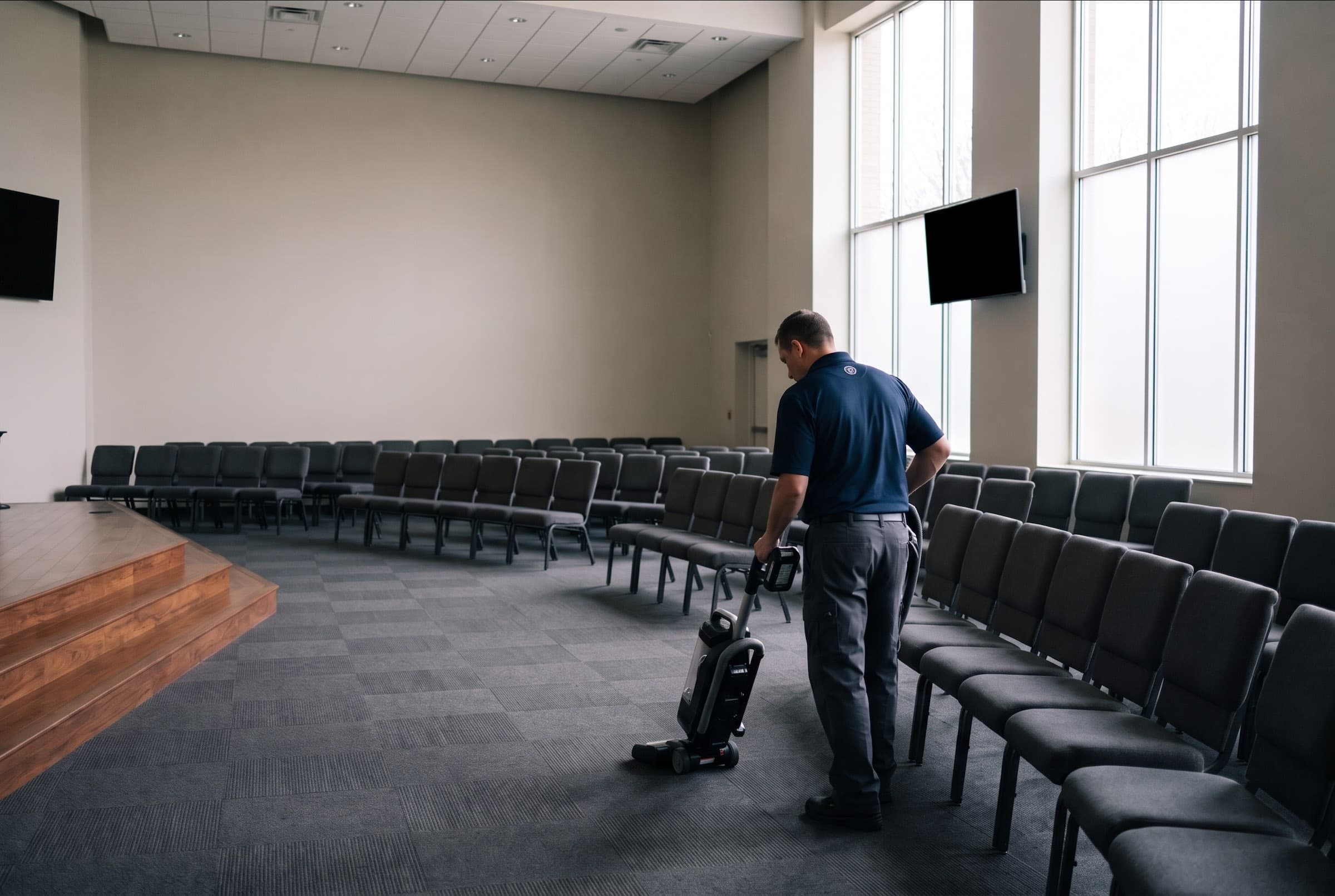
Every Sunday after our morning service, two members of my church stay behind and clean the whole building after everyone else has gone home. They're volunteers, and they're our entire cleaning crew.
I've seen the other ways of doing it, too. I spent five years running the facilities at a private school in Georgia, where we went through two different cleaning companies and, for a while, had our own custodian on staff. We switched away from the first company after we found out it was paying its cleaners minimum wage, and some of them told us they'd been given a 1099 (the tax form for independent contractors) instead of being paid through payroll. I also co-founded American Facility Care, a commercial cleaning company in Indianapolis, so I've seen this job from the side that hires for it and from the side that does it.
Whichever way your church goes, it starts with knowing what the job actually is. Below is a church custodian job description you can copy and make your own, along with what custodians are paid and how to choose between your own custodian, a cleaning company and volunteers. There's a free Word version at the end.
What a church custodian does
A church custodian keeps the building clean, safe and ready for whatever is on the calendar. Some churches, especially Episcopal ones, still use the traditional name for the job, sexton, and it's the same work.
What makes it different from cleaning an office is that a church runs in bursts. It sits quiet most of the week and then fills up all at once, on Sunday morning and on the nights groups meet, so the work follows the church calendar instead of a nine-to-five. A church custodian also does a lot that never shows up in an office job:
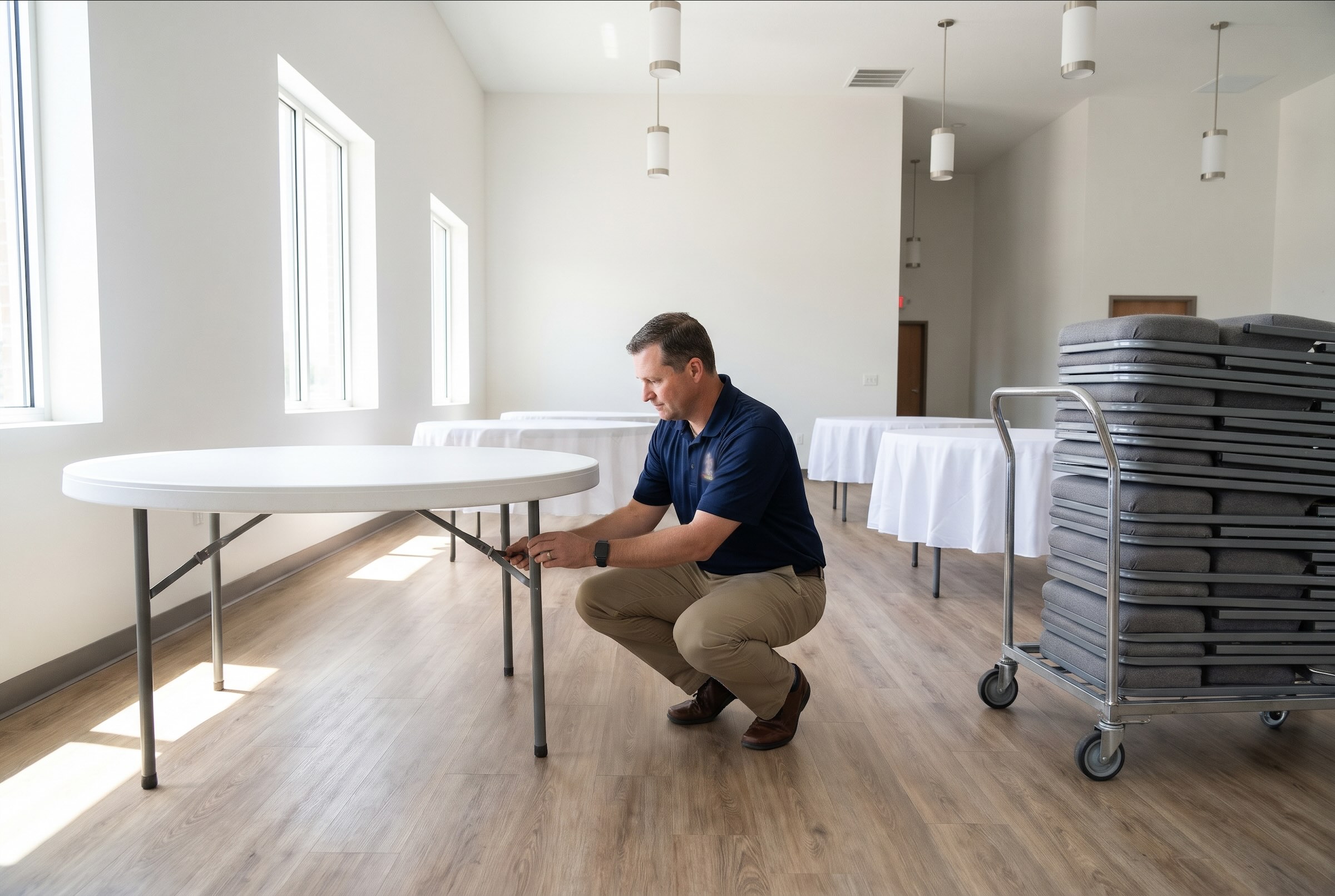
- Setting up and taking down tables and chairs for meals, classes, weddings and funerals, and putting each room back the way it belongs
- Getting the building ready for a funeral on a day or two's notice
- Cleaning the kitchen after potlucks and funeral lunches
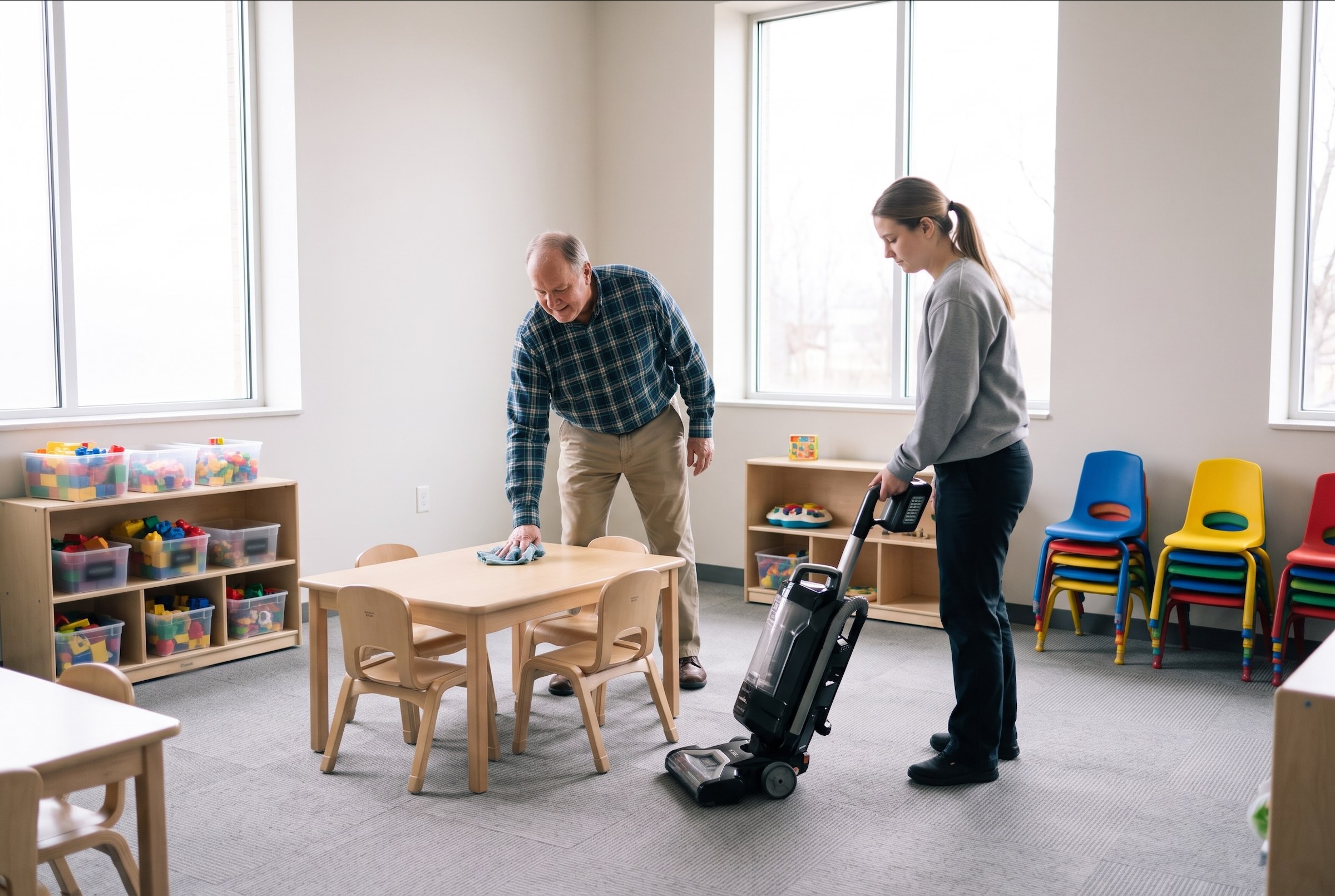
- Sanitizing the toys, tables and changing tables in the nursery and children's rooms
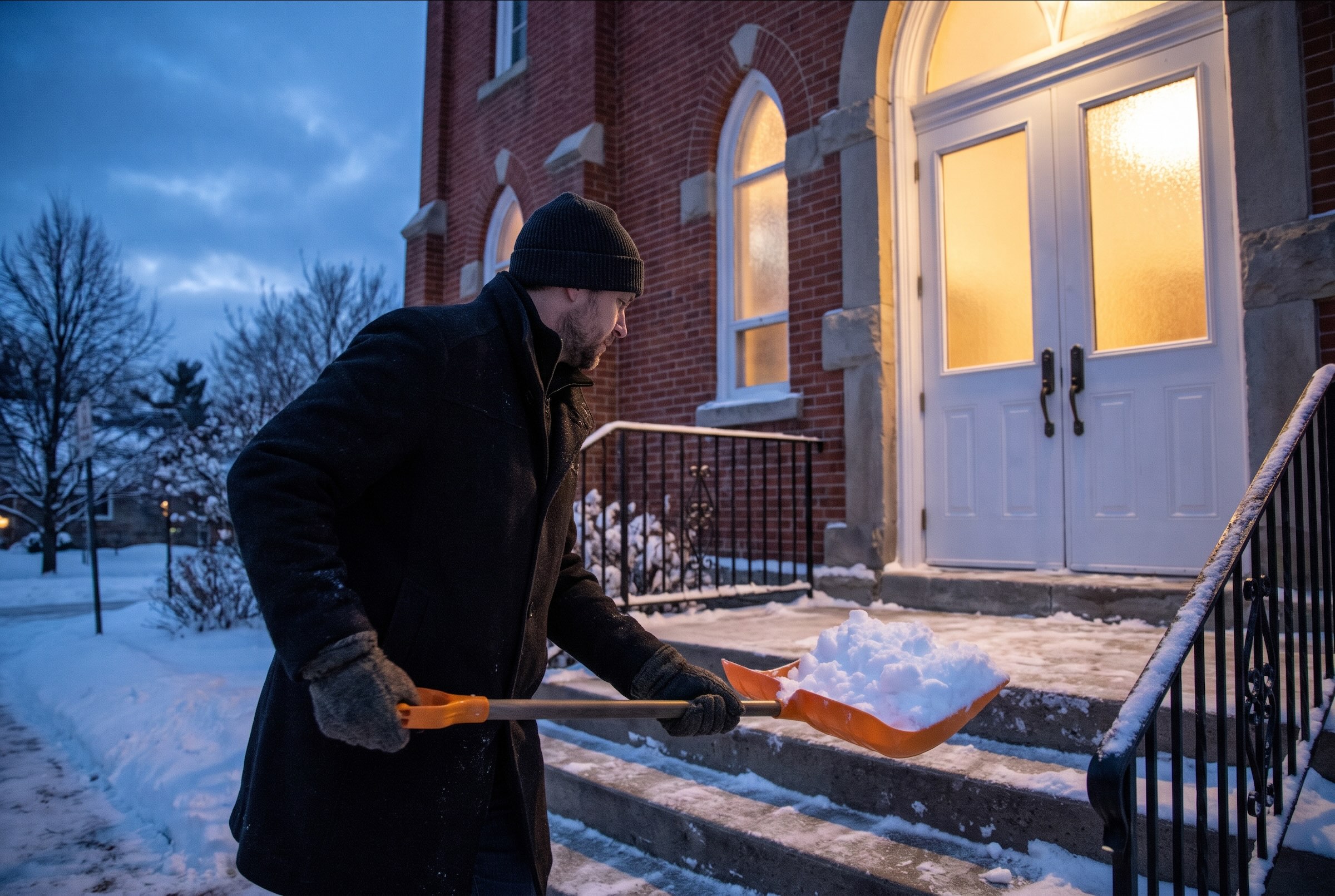
- Clearing snow and ice before the first service, which can mean being there before sunrise on a Sunday
- Opening the building for evening groups and renters, and locking up after the last one leaves
- Looking after the sanctuary and whatever your church uses in worship, the way your church wants it cared for
A church custodian job description you can copy
Change the parts in brackets to fit your church, and leave out anything your custodian won't be doing. The Word version at the end has the same text, ready to edit.
Church custodian (sexton)
- Reports to: [the facility manager, church administrator or executive pastor]
- Hours: [about 20 hours a week], including some evenings and Sunday mornings, with extra hours around weddings, funerals, Christmas and Easter
- Pay: [$__ to $__ an hour]
About the job. [Church name] is looking for a custodian to keep our building clean, safe and ready for worship, ministry and the community groups we host. You'll make sure every room is ready before people arrive and put back after they leave, and on a weekday you may be the first person a visitor meets.
Every day the building is used
- Clean and restock the restrooms: toilets, sinks, mirrors and floors, plus soap, paper towels and toilet paper.
- Empty the trash and recycling, and replace the liners.
- Vacuum the entrances and busy walkways, and sweep or dust-mop the hard floors.
- Wipe down door handles, push plates, light switches, railings and the glass on the entry doors.
- Sanitize the toys, tables and changing tables in the nursery and children's rooms.
Every week
- Scrub the vinyl tile floors at the entrances and in the halls, fellowship hall and kitchen, and buff them once or twice a week.
- Vacuum all of the carpet, including the sanctuary, classrooms and offices.
- Dust the pews, chairs, railings, window sills and ledges, and straighten the hymnals, Bibles and pew racks.
- Clean the kitchen counters, sinks, appliances and floor after every meal or event that uses it.
- Clean the offices and classrooms: desks, tables, whiteboards and trash.
- Check the supplies and tell [name] what to order before anything runs out.
Before and after events
- Set up and take down tables and chairs for services, classes, meals, weddings, funerals and community groups, following the event's notes or room diagram.
- Unlock the building and turn on the lights and the heat or air before events, then lock up afterward and check every door and window.
- Get the building ready for funerals on short notice, and for Christmas, Easter and other big days.
Every season
- Clear snow and ice from the walks, steps and entrances before services and events [or call the snow removal company].
- Help with the yearly deep cleaning, or let in the company that does it: stripping and waxing the vinyl tile, deep cleaning the carpet, washing the windows and dusting up high.
- Change the HVAC filters on schedule [if that's part of this job].
Small repairs and safety
- Change light bulbs and batteries, tighten loose hardware, and make the small repairs you're comfortable making.
- Report anything bigger, like a leak, a broken piece of equipment or a safety hazard, to [name] the same day.
- Store and use cleaning chemicals safely, and follow their safety data sheets.
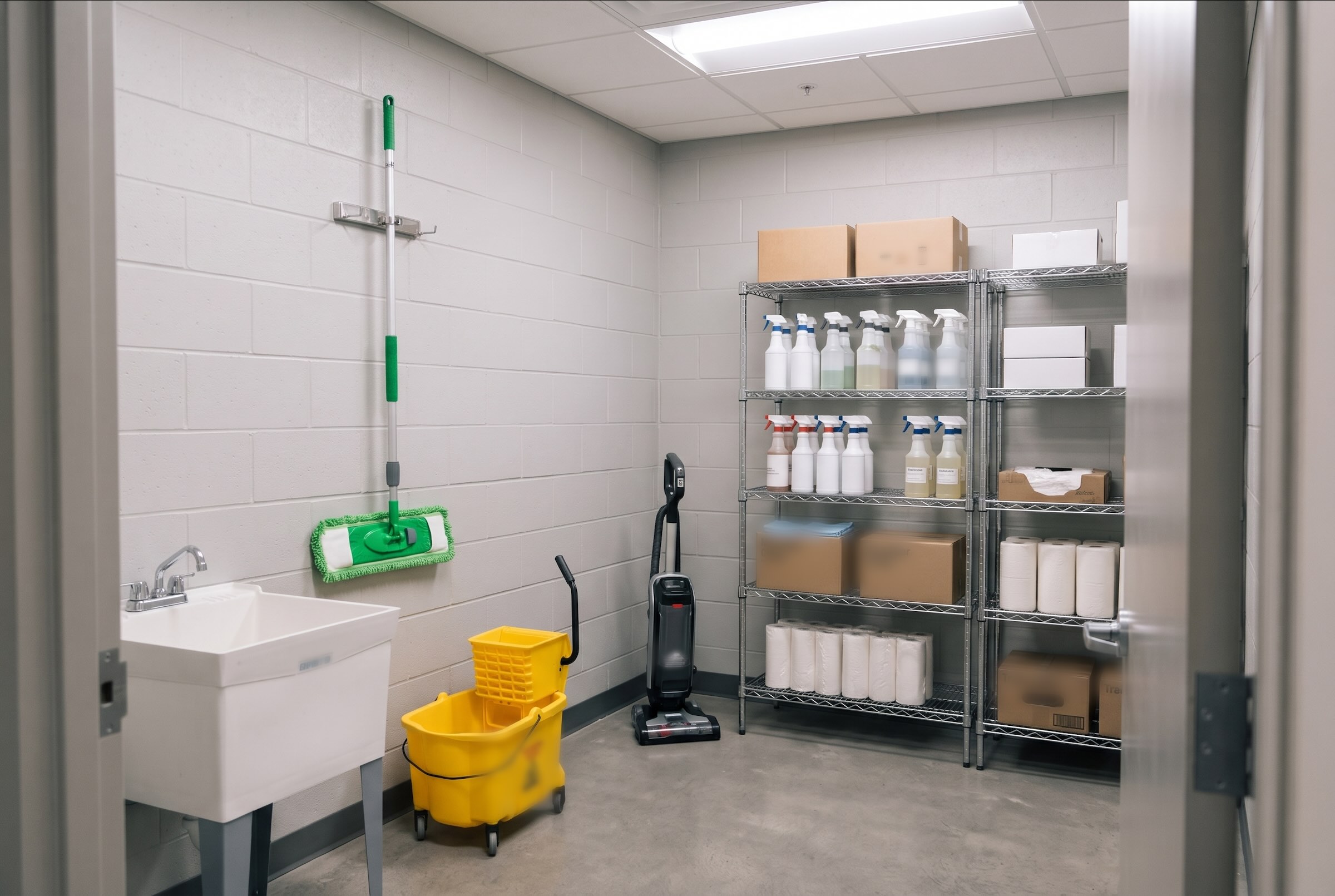
- Keep the supply closet locked and organized, with the mops hung up to dry instead of left standing in the bucket.
- Know where the water shutoffs, electrical panels, fire extinguishers and AED are.
What we're looking for
- Experience cleaning a church, school or other building helps, but we'll train the right person.
- Dependable and trustworthy with keys and alarm codes, and able to work on your own.
- Friendly and patient with members, guests, children and volunteers.
- Able to lift [50] pounds, stand and walk for most of a shift, and use a ladder safely.
- Willing to pass a background check, because the job comes with keys to the building and time in the children's areas.
- [If your church asks this of staff: in agreement with our statement of faith.]
To apply: Send [a short note about yourself and two references] to [name and email] by [date].
What to pay a church custodian
The Bureau of Labor Statistics surveys pay across the country every year, and in its latest figures, from May 2025, the median for custodians who work for religious organizations is $17.54 an hour. (The median is the middle of the range, so half earn more and half earn less.) That's close to the median for custodians in every kind of building, which is $17.71, and the middle half of all custodians earn between $15.50 and $21.18 an hour.
Pay runs higher in cities and lower in small towns, so before you set a range, look up your own state and metro area on that same BLS page and see what nearby churches, schools and cleaning companies are paying.
Your own custodian, a cleaning company or volunteers
I talked through this exact question on our podcast, The Cleaning Indy Podcast, and there isn't one right answer for every church. It mostly comes down to who covers the days when the cleaning can't wait.
Your own custodian
If you already have a custodian you know and trust, who shows up on time, gets along with your staff and volunteers and cleans well, that's hard to beat, and you don't need to change a thing. A custodian on staff gets to know the building, is there when the funeral lunch needs twenty tables, and can change a light bulb or quiet a squeaky door on the same trip.
What you take on is the managing. When we had our own custodian at the school, we were the ones responsible for training them, managing their work and finding a replacement whenever they were sick or on vacation. You can plan around a vacation, but a sick day is a sick day, and when your custodian calls in sick the Saturday before Easter, the restrooms, the trash and the paper towels land on whoever looks after the building, on top of everything else they had planned that week. Hiring is the other challenge, because wages for cleaning jobs have gone up across the board and you're competing with every employer in town for the same people.
Your own custodians can work well when someone on your staff has a solid knowledge of cleaning, the chemicals, OSHA's safety requirements and how to train people, and can manage the custodians day to day. If nobody on your staff does, that managing is the main thing a cleaning company takes off your plate.
One thing to get right before the first paycheck: if you pay one person to clean on your schedule, with your supplies and your checklist, the IRS will most likely see an employee, even if you call them a contractor. The IRS looks at who controls the work and how it gets done, so talk to whoever does your payroll before you hire.
A cleaning company
A cleaning company brings its own people, supplies, equipment and insurance, and a good one keeps a floater, a cleaner trained on the same routine who can step in when your regular cleaner is out, so the building gets cleaned either way. Hiring, training and managing the cleaners all become the company's job instead of yours, and in my experience that's the biggest reason to hire one. Their training should include the right way to clean restrooms and the door handles, counters and other surfaces everyone touches. Floors and carpet are where a good company really earns its money, because stripping and waxing tile and deep cleaning carpet take machines most churches don't own.
Before you sign, ask for a written scope of work that lists every task and how often it gets done, line by line, and ask how they'll check that it was done. At our company, the scope of work becomes the checklist our cleaners follow on their phones, and it's what we inspect against. Keep in mind that a company cleans what's in the contract, on its own schedule, so the setups, the last-minute funeral and the snow before the first service need to be written into the contract or handled by someone else.
Ask how they pay their cleaners, too, because that's where our first company in Georgia went wrong. Some cleaning companies, franchises included, keep their cleaners off the payroll and pay them as independent contractors with a 1099, which saves the company overtime and payroll taxes. That's a practice to stay away from, and it has landed cleaning companies in trouble with the Department of Labor and in court. In 2024, the Labor Department recovered $53,044 in back wages and damages from a South Carolina cleaning service that had misclassified 59 workers as independent contractors and wasn't paying them overtime. The same year, a federal judge in California gave final approval to a $30 million settlement for janitors who said the cleaning franchise Jan-Pro had treated them as independent contractors instead of employees and hadn't paid them minimum wage or overtime.
We talked about this on another episode of our podcast, including a client who came to us from a franchise cleaning company where they weren't even allowed to talk to the people cleaning their building, because those cleaners were contracted workers. So before you sign with any cleaning company, ask:
- Will the people cleaning our building be your employees, on your payroll, or contractors you pay with a 1099?
- Will your own staff clean our building, or do you hand the work to another company?
- Can we meet and talk with the people who'll actually be cleaning?
- What do you do for your employees? Cleaners working long hours for low pay tend to leave, and that turnover shows up in your building.
At our company, everyone who cleans is an employee on our payroll, and a good company won't mind any of these questions.
Volunteers
That's how my church does it, and plenty of small churches run on volunteers like ours, who often care about the building more than anyone.
There are two things to watch for, though. The first is that serving can quietly cross a line. A church is called to shepherd its members, and inviting them into servant ministry is part of that, but it can slide into simply taking advantage of free labor, and that has spiritual implications as well as ethical and moral ones. The second is burnout. The goal should never be to accept someone's willing, servant-hearted help until they get tired of it and burn out, and I believe that's one of the most egregious ways a church can take advantage of a member who's kindly giving their time. Every ministry should have a plan, and for cleaning that means a rotation of volunteers, so that burnout and resentment never happen in your church.
The other hard part comes when the quality slips. We've seen it over and over at churches that call our cleaning company out to bid: once a member's cleaning starts to decline, the conversation is almost always awkward, and it can get dicey when their spouse, a close relative or a friend holds a position in the church. It takes real tact so your church doesn't lose several families over it. Give each volunteer one specific job with a short written checklist rather than "come help on Saturday," because a checklist keeps that conversation about the work instead of the person. And keep the floor machines and the tall ladders with the people who are trained to use them.
Many churches end up with a mix: volunteers or a part-time custodian for the weekly cleaning, and a cleaning company for the floors and carpet once or twice a year. Our preventive maintenance schedule for a church building shows how often each of those comes due.
Before you post the job
- List what your building needs every day it's used, every week and every season. The job description above is a good place to start.
- Decide who handles the setups, the funerals and the snow, because those are the jobs that fall through the cracks.
- Set the hours, and look up the going pay in your area.
- Decide between an employee, a cleaning company and volunteers. An employee needs payroll set up before the first day, a cleaning company should tell you how it pays its cleaners, and volunteers need a rotation so nobody carries it alone.
- Plan the background check, and keep a list of who has which keys and alarm codes.
- Give whoever does the cleaning a checklist and one easy way to report a problem.
Download the template
The church custodian job description (Word) has everything above, ready to edit. It opens in Word, Pages or Google Docs, and the parts in brackets are the ones to change. If you'd rather print it as it is, there's also a PDF version.
Keeping track of the work
Whoever cleans your building, the work goes better when they can see what's coming and report what they find. In WiseHQ, every booking carries its setup and teardown time, so the chairs for Sunday's fellowship lunch show up on the same calendar as the lunch. The maintenance schedule puts each recurring job in front of the person assigned before it's due, and anyone who spots a problem can report it by scanning the QR code in the room. See how WiseHQ works for churches.
At my church, our two volunteers stay after the Sunday service because they want to, and it's our job to make sure it never turns into something they feel they have to do. Whoever cleans your building, write the job down and share the load, so the work gets done and nobody's goodwill gets used up.
Give your custodian one list
WiseHQ puts each recurring job in front of the person assigned before it's due, and anyone who spots a problem can report it by scanning the QR code in the room.